CBSE Skill Hub Initiative: Vocational AI, Design & Robotics Labs under PMKVY 4.0 (2026)

1. What is the CBSE Skill Hub Initiative under PMKVY 4.0?
The Skill Hub Initiative (SHI) is an ambitious joint project launched under the Pradhan Mantri Kaushal Vikas Yojana (PMKVY 4.0) by the Ministry of Skill Development and Entrepreneurship (MSDE) in collaboration with the Department of School Education & Literacy, Ministry of Education, and the Central Board of Secondary Education (CBSE).
Recognizing that thousands of educational campuses across India possess high-value physical infrastructure—such as computer laboratories, science apparatus, workshops, and uninterrupted power—that remains idle after 2:30 PM, on weekends, and during vacations, the initiative transforms these premises into community "Skill Hubs".
These accredited hubs deliver certified, job-role oriented training aligned with the National Skills Qualification Framework (NSQF Levels 2, 3, and 4) to two beneficiary groups: regular in-school students of Classes 9 to 12 as part of their vocational electives, and out-of-school youth or dropouts (aged 15 to 45 years) seeking employable trade skills.
2. Criteria for Schools to Become an Accredited CBSE Skill Hub
💼 Funding & Training Honorarium: Under PMKVY 4.0, accredited schools receive hourly training cost reimbursements, trainer honorariums, and candidate assessment allowances directly from the central skill development fund.
3. High-Demand NSQF Vocational Job Roles for Schools
CBSE schools can select from 33+ approved vocational subjects. The leading technology and design courses include:
4. Composite Skill Lab Hardware Specifications for Skill Hubs
As mandated by CBSE Circular No. Skill-75/2024, every school operating a skill hub must commission the following dedicated infrastructure:
1Core AI & Digital Computing Zone
Part of 600 Sq. Ft. Composite Skill Lab- 20 Dedicated Core i5/i7 computing terminals with high-speed internet
- Full HD webcams and stereo headsets for AI speech recognition practicals
- Licensed and open-source data science tools (Python, Anaconda, TensorFlow Lite)
- Interactive touch display (IFP 75") for trainer demonstration
2Robotics, Electronics & IoT Hardware Bay
Part of 600 Sq. Ft. Composite Skill Lab- FDM 3D Printer for structural prototyping
- Microcontroller kits (Arduino, Raspberry Pi, ESP32) with breadboards
- Comprehensive sensor bank: Ultrasonic, temperature, IR, Bluetooth, gyro
- Soldering and de-soldering safety stations with smoke absorbers
3Hand Tool & Maker Prototyping Corner
Part of 600 Sq. Ft. Composite Skill Lab- Heavy-duty worktable with vice, clamps, and precision hand tools
- Wire strippers, crimping tools, precision screwdrivers, hot air guns
- Safety gear: Anti-static wristbands, safety goggles, fire extinguisher
5. Accreditation, Registration & Student Batch Workflow
Schools looking to operate an accredited Skill Hub follow this four-phase onboarding procedure:
Skill Hub Portal Registration
🔗 skillindiadigital.gov.inThe school registers on the Skill India Digital Hub (SIDH) portal (skillindiadigital.gov.in) using its UDISE+ and CBSE affiliation code.
Selection of Job Roles & Sector Skill Council Alignment
🔗 SIDH DashboardThe school selects target courses (e.g., Junior Software Developer, IoT Assistant, AI Specialist) and maps them to affiliated SSCs.
Batch Creation & Biometric Attendance Setup
🔗 Skill Hub MISBatches of 25-30 candidates are created; a mandatory Aadhaar-based biometric attendance system is configured.
Training, Assessment & Government Certification
🔗 NSDC CertificationFollowing required instruction hours, independent third-party assessors conduct practical evaluations; successful candidates receive NSQF certificates.
6. Quality Audits, Biometrics & Assessment Standards
⚠️ Compliance Notice: Fraudulent candidate enrollments or biometric bypasses result in immediate revocation of Skill Hub accreditation and formal reporting to the CBSE Affiliation Branch.
Frequently Asked Questions (FAQ)
Does establishing a CBSE Skill Hub require massive initial capital investment?
No. If the school already possesses an operational computer lab or Atal Tinkering Lab (ATL), that existing space can be leveraged post-school by adding specific vocational modules and software.
How are school students and community youth scheduled simultaneously?
Regular school students attend vocational classes during standard school hours, while sessions for community youth are conducted post-school (after 3:00 PM) or during weekends.
Do learners receive an officially accredited government certificate upon course completion?
Yes. Upon passing practical and theoretical evaluations, candidates receive a government-recognized NSQF certificate issued jointly by NSDC and the concerned Sector Skill Council.
How does CSEEL assist schools in setting up a Skill Hub?
CSEEL supplies complete turnkey infrastructure (AI workstations, 3D printers, robotics kits), maps NSDC NSQF curriculum frameworks, configures biometric systems, and conducts certified trainer development.
Devendra Singh
Facilitated Skill Hub Center accreditations, PMKVY 4.0 batch registrations, NSDC NSQF curriculum mapping, and Composite Skill Lab setups for over 90+ CBSE schools.
Explore Other School Lab Solutions
Beyond Composite Science Labs, CSEEL designs and equips turnkey NEP 2020 and NITI Aayog aligned innovation labs across India.
 NITI Aayog (P1–P4)
Atal Tinkering Lab (ATL)
Turnkey setup for NITI Aayog AIM packages with 3D printers, electronics, and rapid prototyping.
- Packages P1 to P4 complete hardware & 3D printers
- Arduino, sensors, mechanical tools & mentor training
 CBSE Skill 417 & 843
Artificial Intelligence & ML Lab
Future skills lab with computer vision rigs, edge AI accelerators, and Python neural network tools.
- Edge AI vision cameras & Coral accelerators
- Python SDK, OpenCV & hands-on student projects
 Circular Skill-75/2024
Composite Skill Lab
Mandatory vocational lab for Classes 6–12 with AI, coding, robotics, and 33 CBSE skill subjects.
- Option A (600 sq ft) or Option B (2x 400 sq ft)
- 33 vocational modules including AI Code 417 & 843
 Senior Secondary (11–12)
Advance Composite Science Lab
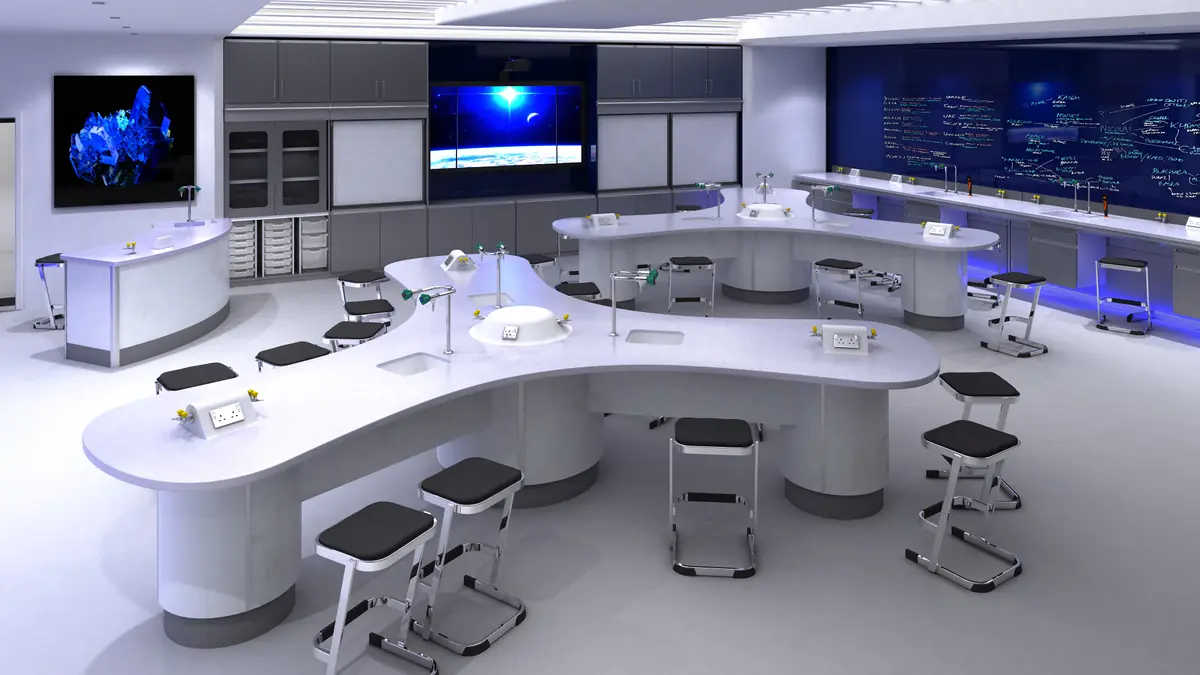
High-end interdisciplinary research lab with analytical spectrophotometers and research microscopes.
- Digital spectrophotometer, research microscopes & centrifuge
- Fume exhaust hood & Class 11-12 research stations
 ISRO Space Aligned
Astronomical & Space Lab
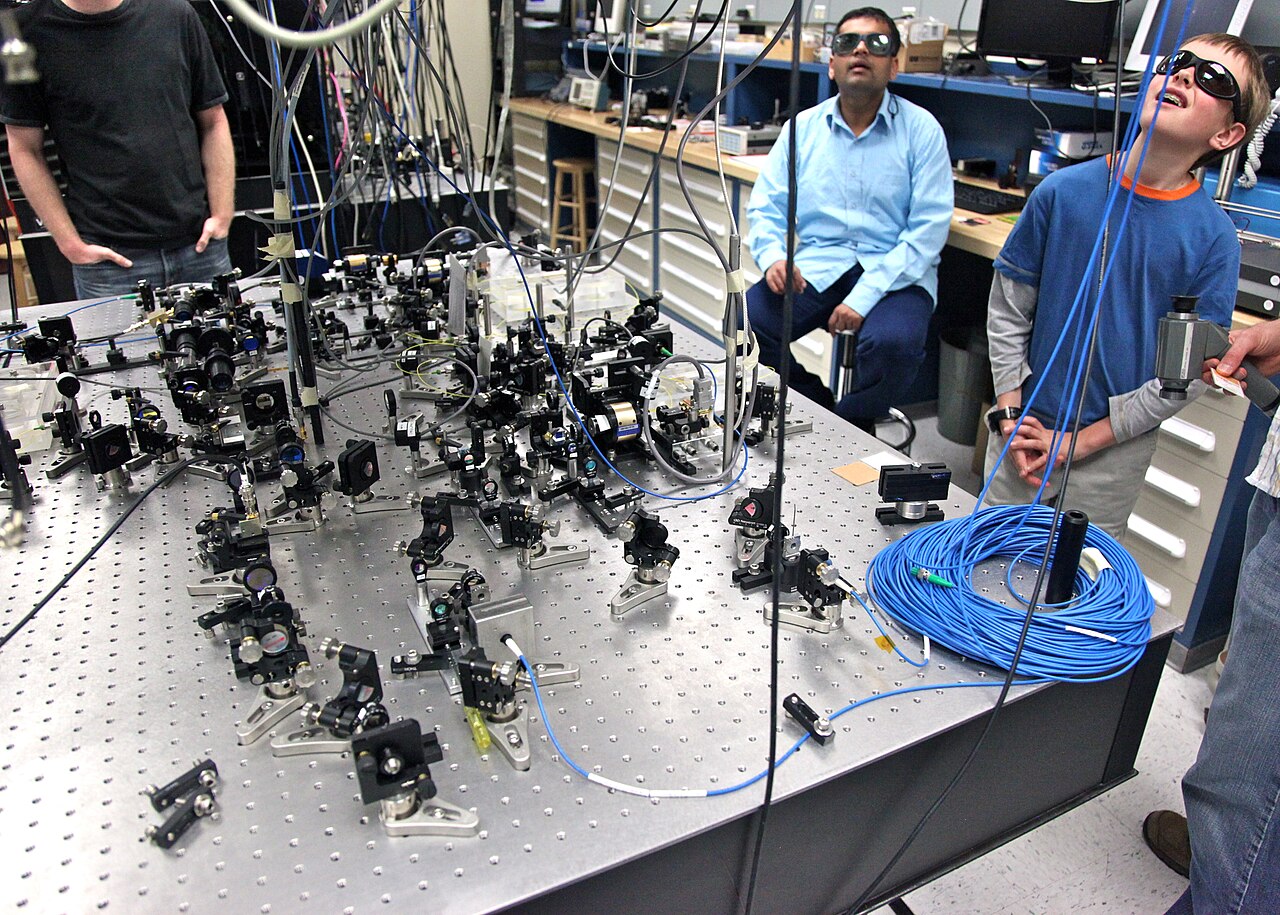
Interactive celestial observatory with motorized GoTo telescopes, solar filters, and planetarium software.
- Motorized 8" Schmidt-Cassegrain tracking telescope
- H-alpha solar filter, digital planetarium & astrophotography
 DGCA Micro-Aviation
Aerospace & Drone Lab
Aeronautical wind tunnel simulators, modular quadcopter kits, flight simulators, and safety net cage.
- Modular DIY multirotor drone kits & flight simulators
- Wind tunnel lift/drag test kits & flight safety netting
 Industry 4.0 Robotics
Robotics & IoT Super-Lab
Industrial kinematics, multi-sensor autonomous rovers, smart IoT cloud, and WRO competition tracks.
- 4-DOF/6-DOF robotic arms & autonomous rovers
- ESP32 wireless mesh & World Robot Olympiad mats
 NEP 2020 Makerspace
Design Thinking & Innovation Lab
Human-centric design studio with enclosed laser cutters, vinyl plotters, and woodworking workbenches.
- Enclosed laser cutter/engraver & vinyl plotter
- Heavy-duty ergonomic maker workbenches & tool kits
 Spatial Computing
AR / VR Immersive Science Lab
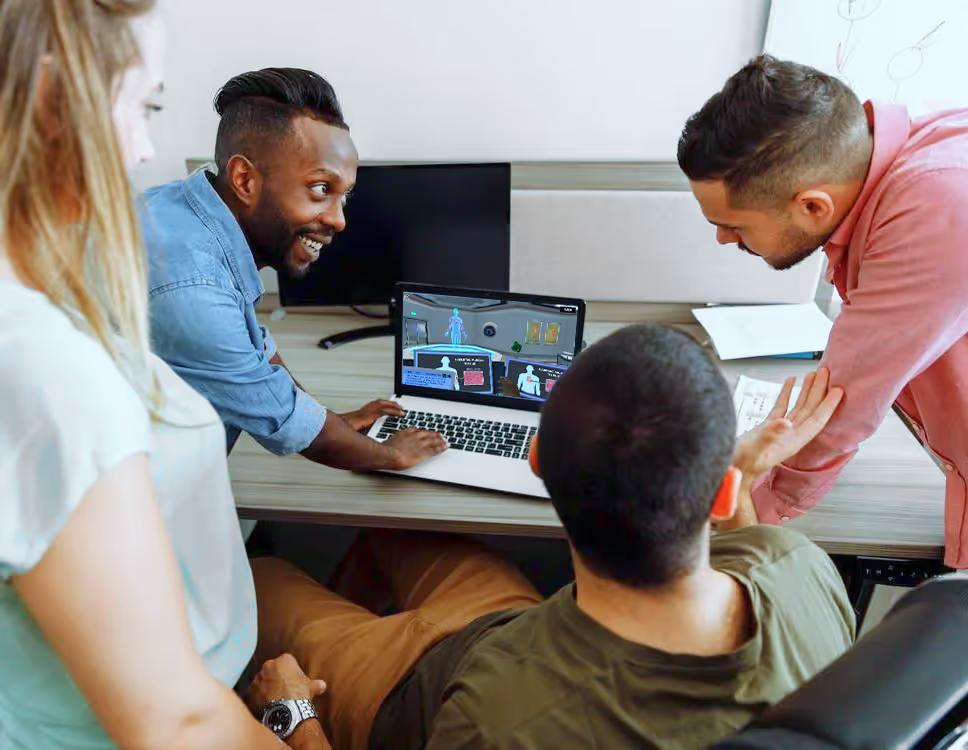
Virtual reality suites for 3D molecular biology, virtual dissections, and risk-free hazardous chemistry.
- Standalone 6-DoF VR headsets with teacher dashboard
- Virtual anatomy & chemistry simulations with zero hazard
 CBSE Math Lab Norm
Vedic & Experiential Math Lab
Eliminates math phobia through tactile geometric proof solids, algebra tiles, clinometers, and abacus.
- Tactile pythagoras models, algebra tiles & clinometers
- Vedic arithmetic abacus & chapter-wise NCERT kits
 Digital Phonetics
Language & Phonetics Lab
Interactive acoustic booths with AI-powered pronunciation waveforms, debate recording, and fluency trainers.
- Student audio terminals with master teacher console
- Real-time voice waveform matching for neutral accent
Planning Multiple Labs for CBSE Affiliation or PM SHRI Grant?
CSEEL offers integrated turnkey packages for Composite Labs, Atal Tinkering Labs (ATL), AI & Robotics Suites under a single audit-ready warranty with 3D CAD plans.