PM SHRI Schools Scheme: Modernization Grants, Lab Upgrade & Infrastructure Norms (2026)

1. What is PM SHRI Schools Scheme & Its National Strategic Vision?
The Pradhan Mantri Schools for Rising India (PM SHRI) is a landmark centrally sponsored scheme approved by the Union Cabinet on 7th September 2022 with a comprehensive financial outlay of ₹27,360 Crore spanning a five-year implementation window. Its foundational mandate is to upgrade more than 14,500 government schools (administered by Central Government/KVS/NVS, State Governments, and Local Bodies) into green, experiential, and future-ready institutions that embody the complete operational blueprint of the National Education Policy (NEP) 2020.
Unlike conventional ad-hoc educational grants, PM SHRI adopts a rigorous "Saturation Approach". This methodology guarantees that designated institutions receive holistic, multi-pillar funding across Curriculum & Pedagogy, Infrastructure & Digital Technology, Human Resources & Leadership, Inclusive Practices & Gender Equity, Management & Governance, and Beneficiary Satisfaction.
A significant proportion of the non-recurring capital grant is explicitly earmarked for constructing state-of-the-art Integrated Science Laboratories, Tinkering & Vocational Innovation Labs, Artificial Intelligence & Robotics workstations, and high-speed digital classrooms under General Financial Rules (GFR) 2017.
2. Eligibility Criteria & School Selection Methodology (Challenge Method)
⚠️ Note for Private Schools: Private unaided institutions are not directly eligible for central PM SHRI capital funding; however, they can form academic mentorship linkages and cluster partnerships with regional PM SHRI institutions to align with CBSE composite lab benchmarks.
3. Financial Norms & Head-wise Budget Allocation Matrix
PM SHRI allocations are governed strictly under Recurring and Non-Recurring accounting heads. Under Ministry of Education audit mandates, capital laboratory and workshop assets must be procured exclusively through non-recurring budget envelopes:
4. PM SHRI Mandatory Lab Setup Norms & Technical Specifications
In accordance with Chapter 4 of the PM SHRI Operational Guidelines, every selected secondary and senior secondary institution must commission the following dedicated laboratory zones:
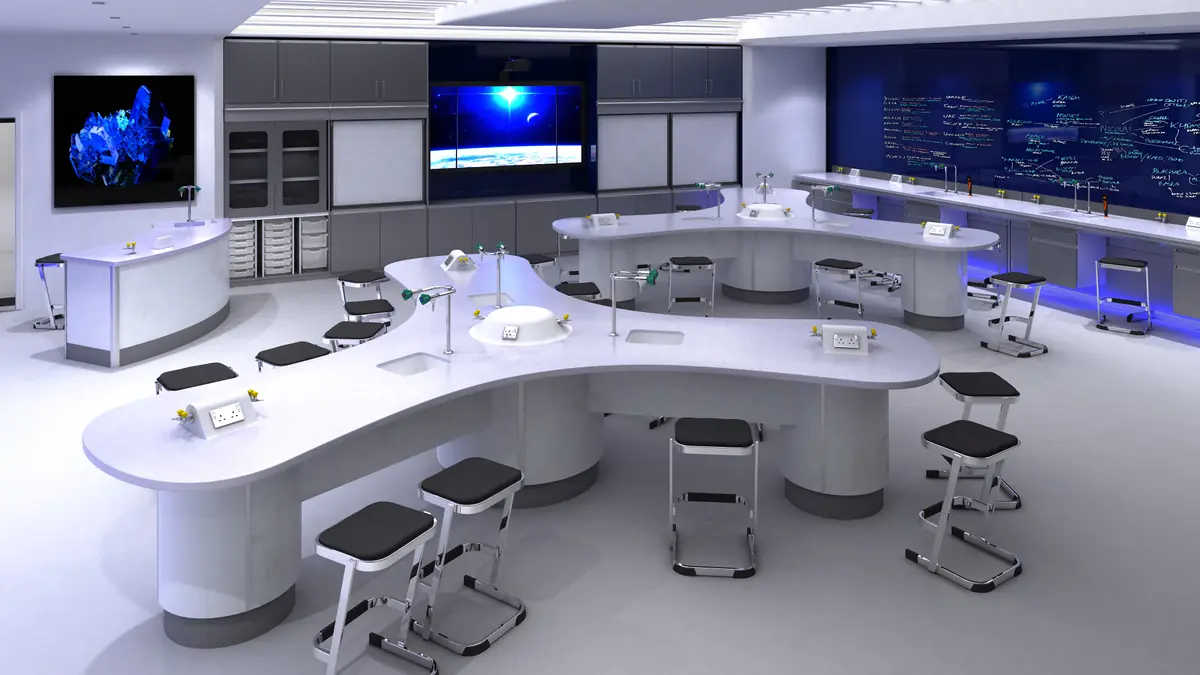
1Integrated Science & Composite Lab
Min. 600 Sq. Ft. (Continuous Unobstructed Layout)- 10 Heavy-duty student workbenches topped with chemical-resistant polished black granite
- 8 to 10 Acid-resistant ceramic wash sinks supplied with continuous pressurized running water
- Complete inventory of 49 non-consumable physics and general science apparatus
- 18 High-purity analytical chemical reagents secured inside locked double-door metal storage cabinets
- 15 Preserved biological museum specimens and permanent microscopic mounts
2Innovation & Tinkering Skill Lab (ATL Aligned)
Min. 500 to 600 Sq. Ft.- Fused Deposition Modeling (FDM) 3D Printer with auto-bed leveling and PLA filaments
- Robotics starter, intermediate, and autonomous sensor kits
- Microcontroller development boards (Arduino UNO, ESP32, Raspberry Pi 4/5)
- Digital storage oscilloscopes, precision multimeters, and soldering rework stations
- Anti-static ESD rubber bench matting and ergonomic student workstation stools
3ICT & Computational Intelligence Lab
Min. 400 to 600 Sq. Ft.- 20 to 40 All-in-One Desktop computers / Thin Clients connected via gigabit LAN
- 1 Interactive 75-inch 4K Touch Display with dual-OS Windows/Android architecture
- Dedicated AI programming environments (Python, Jupyter, Scratch, OpenCV)
- 2-Hour heavy-duty online UPS inverter power backup system
5. Step-by-Step Fund Utilization & Procurement Workflow
All procurements must strictly adhere to the General Financial Rules (GFR-2017) and public procurement protocols executed via the Government e-Marketplace (GeM):
Annual Work Plan & Budget (AWP&B) Approval
🔗 PM SHRI National PortalThe School Management Committee (SMC) formulates and submits an itemized DPR for lab modernization to the District Project Office (DPO) and State Project Directorate.
Activation of Single Nodal Account (SNA) / PFMS Child Account
🔗 PFMS Portal (pfms.nic.in)Central and State matching funds are electronically credited into the school’s designated Zero Balance Account (ZBA) mapped on the Public Financial Management System (PFMS).
GeM Bidding & Verified OEM Procurement
🔗 GeM Portal (gem.gov.in)Scientific apparatus, 3D printers, modular furniture, and digital hardware are procured via GeM Custom Bids or Direct Purchase under GFR Rule 149 from empanelled turnkey partners like CSEEL.
Physical Delivery, Installation & Asset Verification
🔗 On-site InspectionThe turnkey supplier executes on-site commissioning, conducts equipment calibration, and assists with logging unique serial numbers in the Master Stock Register.
Utilization Certificate (UC) & Third-Party Audit
🔗 PRABANDH / PM SHRI DashboardThe Principal submits a Form GFR 12-C Utilization Certificate certified by an authorized auditor. Subsequent tranche disbursals require proof of 75%+ fund utilization.
6. Mandatory Audits, Compliance & Critical Pitfalls to Avoid
🚨 Statutory Caution: Procuring scientific or digital hardware through unverified offline local vendors without GeM registration or valid GST invoices risks immediate disqualification during CAG audits and the revocation of subsequent grant tranches.
Frequently Asked Questions (FAQ)
Can PM SHRI schools procure lab equipment from private turnkey vendors?
Yes, provided the procurement is executed through the Government e-Marketplace (GeM) in strict accordance with GFR-2017 regulations. Schools can engage GeM-registered OEMs and turnkey lab providers like CSEEL through direct purchase or competitive bidding.
What is the total grant disbursement ceiling for an individual PM SHRI school?
The PM SHRI scheme is executed over a five-year cycle. Individual institutions are sanctioned an aggregate development envelope between ₹1.00 Crore and ₹2.00 Crore, with initial first-year allocations typically ranging from ₹25 Lakh to ₹40 Lakh for core lab and infrastructural modernization.
If a school already possesses an operational Atal Tinkering Lab (ATL), is it still eligible for science lab funding?
Yes. An ATL operates as a dedicated open innovation and tinkering workspace, whereas PM SHRI allocates separate, independent funding heads for curricular Composite Science Laboratories (Physics, Chemistry, Biology) and advanced ICT digital suites.
Which banking protocol governs vendor payments and fund releases?
All transactions are managed exclusively via the Public Financial Management System (PFMS) through a mapped Single Nodal Account (SNA) or Zero Balance Account (ZBA). Cash transactions and manual paper cheques are strictly disallowed.
What specific turnkey assistance does CSEEL provide to PM SHRI schools?
CSEEL delivers end-to-end turnkey support: preparing comprehensive DPRs, drafting GeM bid specifications, supplying 49 non-consumable apparatus and 3D printing hardware, conducting certified teacher training, and completing asset register documentation.
Devendra Singh
Advising 250+ KVs, JNVs, and State Model Schools on PM SHRI infrastructure DPR preparation, GFR-2017 compliant lab procurement, and PFMS fund utilization.
Explore Other School Lab Solutions
Beyond Composite Science Labs, CSEEL designs and equips turnkey NEP 2020 and NITI Aayog aligned innovation labs across India.
 NITI Aayog (P1–P4)
Atal Tinkering Lab (ATL)
Turnkey setup for NITI Aayog AIM packages with 3D printers, electronics, and rapid prototyping.
- Packages P1 to P4 complete hardware & 3D printers
- Arduino, sensors, mechanical tools & mentor training
 CBSE Skill 417 & 843
Artificial Intelligence & ML Lab
Future skills lab with computer vision rigs, edge AI accelerators, and Python neural network tools.
- Edge AI vision cameras & Coral accelerators
- Python SDK, OpenCV & hands-on student projects
 Circular Skill-75/2024
Composite Skill Lab
Mandatory vocational lab for Classes 6–12 with AI, coding, robotics, and 33 CBSE skill subjects.
- Option A (600 sq ft) or Option B (2x 400 sq ft)
- 33 vocational modules including AI Code 417 & 843
 Senior Secondary (11–12)
Advance Composite Science Lab
High-end interdisciplinary research lab with analytical spectrophotometers and research microscopes.
- Digital spectrophotometer, research microscopes & centrifuge
- Fume exhaust hood & Class 11-12 research stations
 ISRO Space Aligned
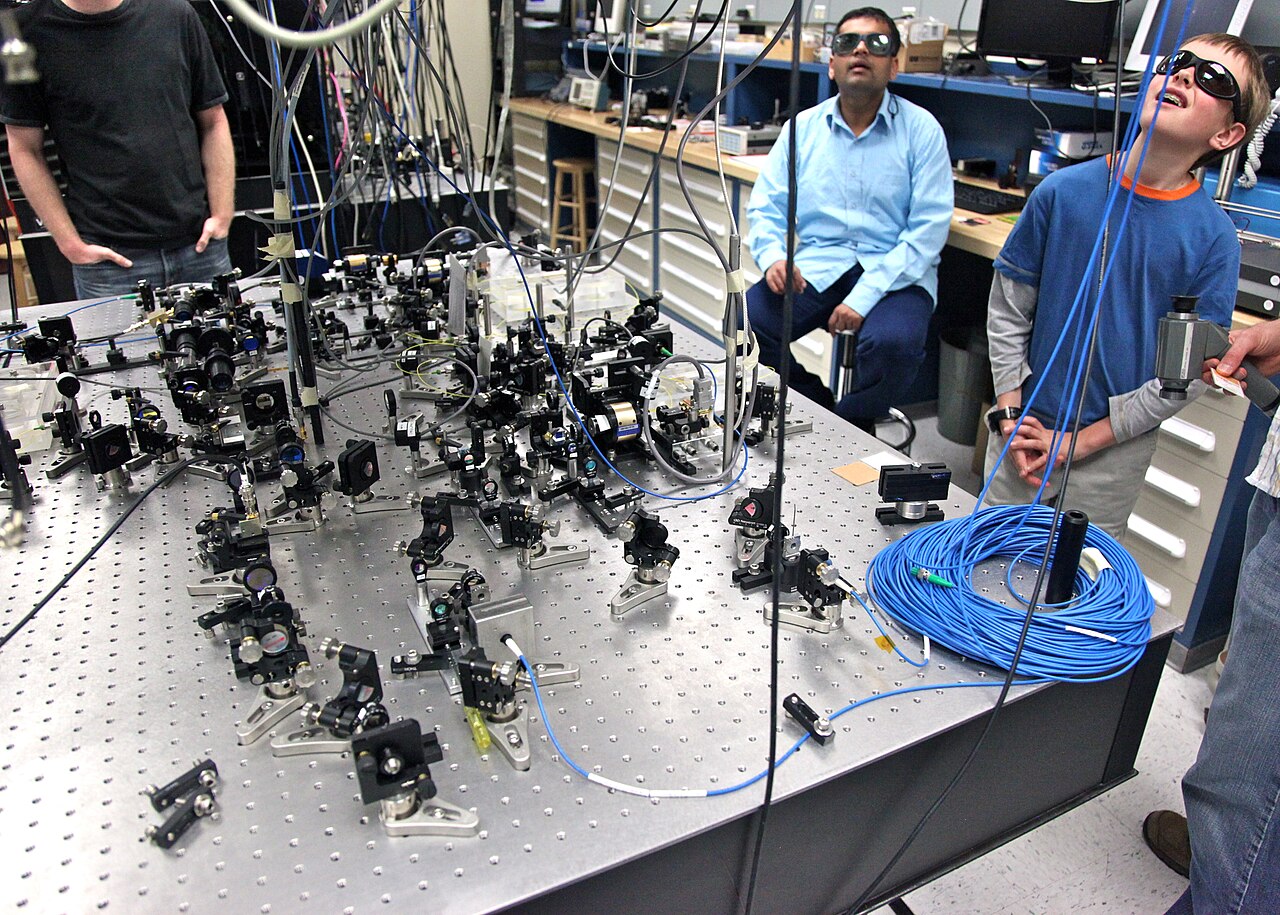
Astronomical & Space Lab
Interactive celestial observatory with motorized GoTo telescopes, solar filters, and planetarium software.
- Motorized 8" Schmidt-Cassegrain tracking telescope
- H-alpha solar filter, digital planetarium & astrophotography
 DGCA Micro-Aviation
Aerospace & Drone Lab
Aeronautical wind tunnel simulators, modular quadcopter kits, flight simulators, and safety net cage.
- Modular DIY multirotor drone kits & flight simulators
- Wind tunnel lift/drag test kits & flight safety netting
 Industry 4.0 Robotics
Robotics & IoT Super-Lab
Industrial kinematics, multi-sensor autonomous rovers, smart IoT cloud, and WRO competition tracks.
- 4-DOF/6-DOF robotic arms & autonomous rovers
- ESP32 wireless mesh & World Robot Olympiad mats
 NEP 2020 Makerspace
Design Thinking & Innovation Lab
Human-centric design studio with enclosed laser cutters, vinyl plotters, and woodworking workbenches.
- Enclosed laser cutter/engraver & vinyl plotter
- Heavy-duty ergonomic maker workbenches & tool kits
 Spatial Computing
AR / VR Immersive Science Lab
Virtual reality suites for 3D molecular biology, virtual dissections, and risk-free hazardous chemistry.
- Standalone 6-DoF VR headsets with teacher dashboard
- Virtual anatomy & chemistry simulations with zero hazard
 CBSE Math Lab Norm
Vedic & Experiential Math Lab
Eliminates math phobia through tactile geometric proof solids, algebra tiles, clinometers, and abacus.
- Tactile pythagoras models, algebra tiles & clinometers
- Vedic arithmetic abacus & chapter-wise NCERT kits
 Digital Phonetics
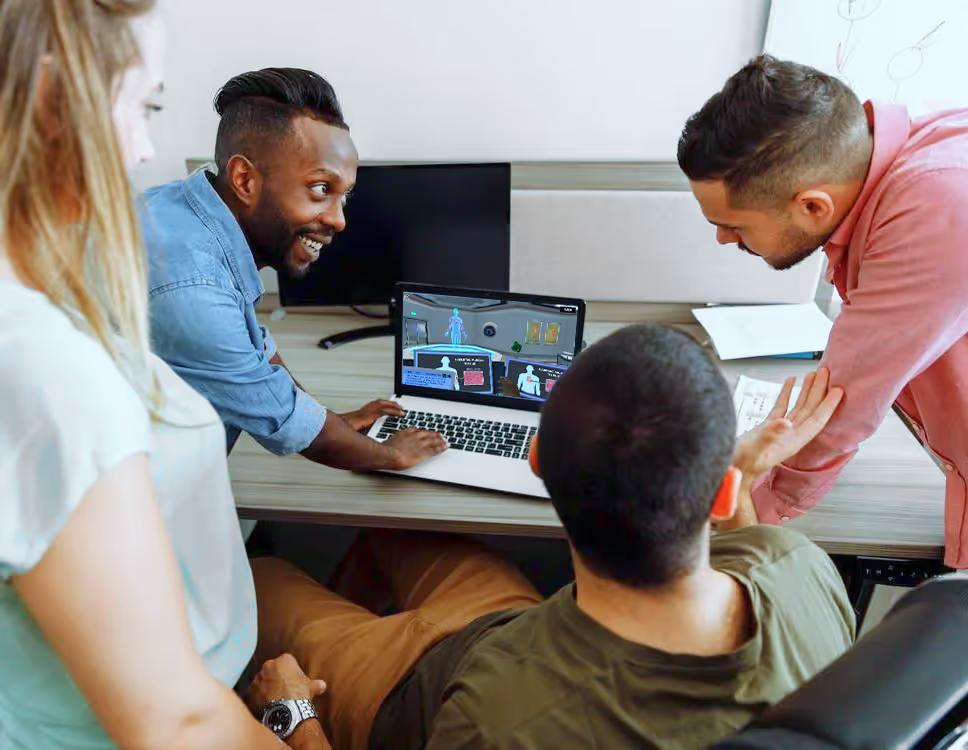
Language & Phonetics Lab
Interactive acoustic booths with AI-powered pronunciation waveforms, debate recording, and fluency trainers.
- Student audio terminals with master teacher console
- Real-time voice waveform matching for neutral accent
Planning Multiple Labs for CBSE Affiliation or PM SHRI Grant?
CSEEL offers integrated turnkey packages for Composite Labs, Atal Tinkering Labs (ATL), AI & Robotics Suites under a single audit-ready warranty with 3D CAD plans.