
CBSE Composite Science & Skill Lab Setup Guide: Norms, Infrastructure, and Inspection Requirements
1. What is a Composite Science Laboratory?
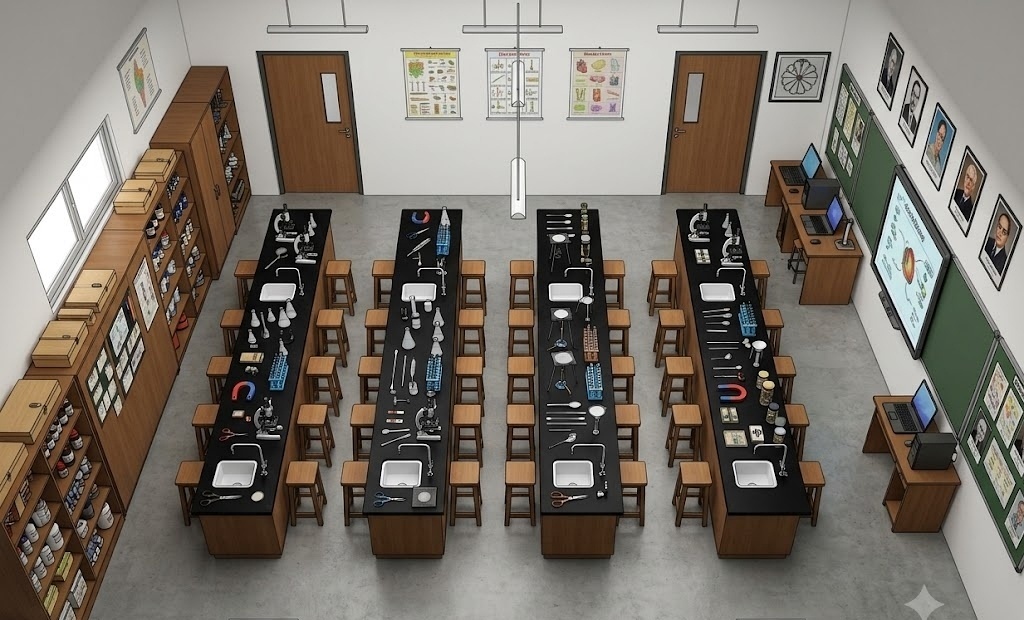
A Composite Science Laboratory is a specialized, multi-disciplinary educational studio designed for Secondary School students (Classes 6th to 10th). Unlike Senior Secondary schools (Classes 11th and 12th) that require three separate, isolated laboratories for Physics, Chemistry, and Biology, a Composite Science Lab brings all three foundational science branches together into a single, cohesive 600 sq. ft. learning environment.
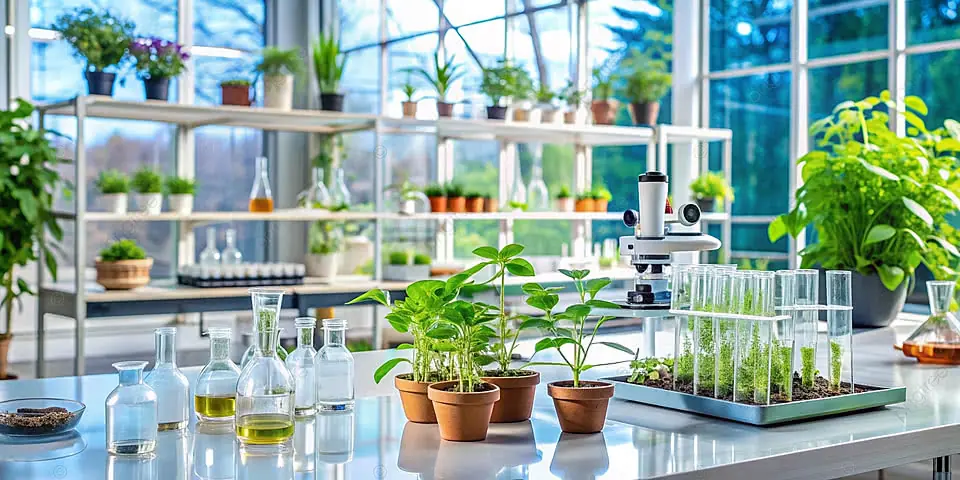
In this unified space, learners perform hands-on optics and mechanics experiments, chemical titrations and exothermic reaction tests, and biological microscopic slide observations using centralized water sinks, acid-resistant workbenches, and shared smart digital displays.
2. Regulatory Origins: Who Started It, When, and Under Which Mandate?
The Composite Science Laboratory mandate was formally conceptualized and enforced by the Central Board of Secondary Education (CBSE) under Chapter 4 (Rule 4.4) of the official CBSE Affiliation Bye-Laws.
With the introduction of the digital SARAS (School Affiliation Re-Engineered Automation System) portal, CBSE codified the definitive Standard Operating Procedure (SOP). This SOP replaced arbitrary inspections with measurable, geotagged videography criteria: every school seeking fresh secondary affiliation, extension, or upgradation must maintain an operational, fully-equipped 600 sq. ft. Composite Science Lab with 8 sinks and 40 stools before an inspection committee can grant approval.
3. Why Was the Composite Science Lab Introduced?
CBSE introduced the Composite Science Lab model to solve three deep-rooted challenges in Indian school education:
Eliminating Idle Classrooms
Building 3 separate 600 sq. ft. labs (1,800 sq. ft. total) for Classes 6–10 is financially burdensome for most private and trust schools. Individual subject labs remain vacant for 70% of the timetable. A composite lab consolidates infrastructure into a single, high-utilization room.
Interdisciplinary Science
Middle and secondary school science is naturally interconnected. Photosynthesis combines light physics with biochemistry. A unified lab environment enables teachers to conduct cross-disciplinary experiments without shuffling students between different rooms.
Experiential Learning
National Education Policy 2020 (Para 4.6 & Para 7.5) mandates that classroom transactions must move away from rote memorization toward hands-on observation, hypothesis formulation, data collection, and scientific temper from the school level itself.
4. Essential Implementation Pillars & Technical Reviews
Setting up a CBSE-compliant Composite Science Laboratory involves six foundational pillars. Instead of browsing scattered specifications, review each executive summary below and access the dedicated in-depth checklists, blueprints, and budgeting tools:
Official CBSE Material & Apparatus Checklist
CBSE SARAS SOP strictly specifies batch quantities for 49 non-consumable apparatus (including optical benches, concave/convex mirrors, compound microscopes, spring balances, and digital multimeters), 18 essential laboratory-grade chemicals (dilute HCl, copper sulphate, sodium hydroxide, litmus indicators), and permanent biological slides & specimens. All glassware must strictly comply with Borosilicate 3.3 thermal standards.
Room Dimensions, Plumbing Architecture & 3D Layout
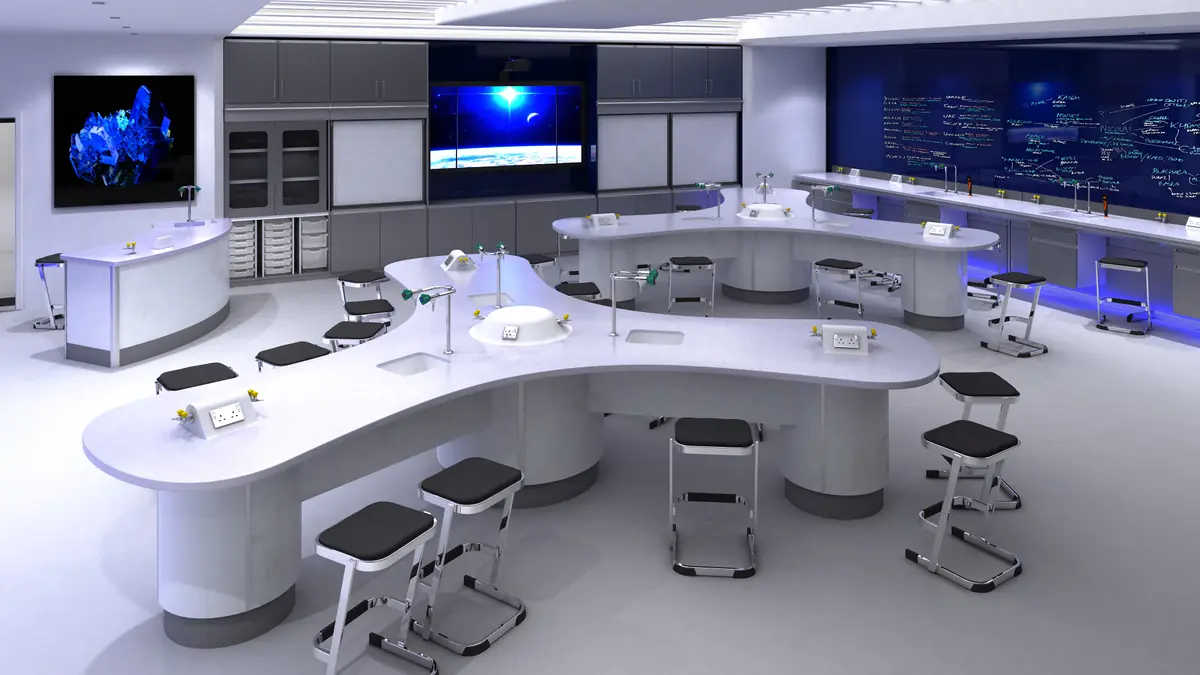
Clause 5 mandates a minimum carpet area of 600 sq. ft. (typically 30 ft × 20 ft) accommodating 40 seated students simultaneously. The floor plan requires 4 central island working tables (8 ft × 4 ft) with acid-resistant granite counters, 8 dedicated plumbing wash sinks with continuous running water, an elevated teacher demonstration dais, two outward-opening safety fire exits, and dual ceiling-mounted exhaust ventilators.
Official CBSE SARAS SOP & Inspection Readiness
CBSE inspection committees conduct physical audits with 360-degree geo-tagged videography. Crucial compliance triggers include: 18 mandatory student safety guidelines prominently framed on walls, dual pressurized ABC-type fire extinguishers, fully stocked first-aid stations, chemical poison lock-and-key storage, active exhaust ventilation, and calibrated consumables logbooks.
Complete Cost Estimation & Itemized BOQ Breakdown
A turnkey composite laboratory setup typically ranges from ₹2.85 Lakhs to ₹6.50 Lakhs depending on existing civil readiness. Expenditure divides into: Lab Furniture & Granite Workbenches (₹1.20L–₹2.20L), 49 Non-Consumable Apparatus (₹75k–₹1.40L), Plumbing & Sanitary (₹35k–₹65k), Safety & Electricals (₹25k–₹45k), and Annual Recurring Chemicals (₹20k–₹35k).
Turnkey Vendor Selection & GeM Procurement Guide
Selecting an unverified local supplier often leads to affiliation rejections due to uncalibrated apparatus, thin glassware, and non-compliant sink spacing. Schools must evaluate vendors on ISO/SEFA certifications, GeM (Government e-Marketplace) registration, 100% CBSE SARAS compliance guarantees, on-site calibration, and inspection dossier handovers.
Composite Science Lab vs. Composite Skill Lab
While the Composite Science Lab is a mandatory prerequisite for CBSE secondary affiliation (Classes 6–10 Science), CBSE introduced the Composite Skill Lab under Circular Skill-75/2024. Progressive institutions are now integrating both into a dual-purpose 2-in-1 hybrid innovation hub, combining physics & biology stations with 33 vocational skill modules like AI, Robotics, and IoT.
5. Frequently Asked Questions
Is a Composite Science Lab mandatory for CBSE secondary affiliation?
Yes. As per CBSE Affiliation Bye-Laws and SARAS SOP, every secondary school (up to Class 10) must establish a minimum 600 sq. ft. Composite Science Laboratory before affiliation approval.
How many wash sinks are required by CBSE SARAS SOP?
Clause 5.7 explicitly mandates 8 sinks with continuous running water supply on student island tables, plus 1 demonstration sink on the teacher demo bench (total 9 sinks).
What is the turnaround time for CSEEL turnkey setup?
CSEEL completes turnkey lab setup—including 3D CAD drafting, plumbing, bench fabrication, equipment supply, and inspection dossier—in 14 business days.
Devendra Singh
Lead Educational Infrastructure Consultant at CSEEL. Specialized in CBSE SARAS affiliation norms, Atal Tinkering Labs (ATL), and NEP 2020 STEM experiential lab setups across India.
Explore Other School Lab Solutions
Beyond Composite Science Labs, CSEEL designs and equips turnkey NEP 2020 and NITI Aayog aligned innovation labs across India.
 NITI Aayog (P1–P4)
Atal Tinkering Lab (ATL)
Turnkey setup for NITI Aayog AIM packages with 3D printers, electronics, and rapid prototyping.
- Packages P1 to P4 complete hardware & 3D printers
- Arduino, sensors, mechanical tools & mentor training
 CBSE Skill 417 & 843
Artificial Intelligence & ML Lab
Future skills lab with computer vision rigs, edge AI accelerators, and Python neural network tools.
- Edge AI vision cameras & Coral accelerators
- Python SDK, OpenCV & hands-on student projects
 Circular Skill-75/2024
Composite Skill Lab
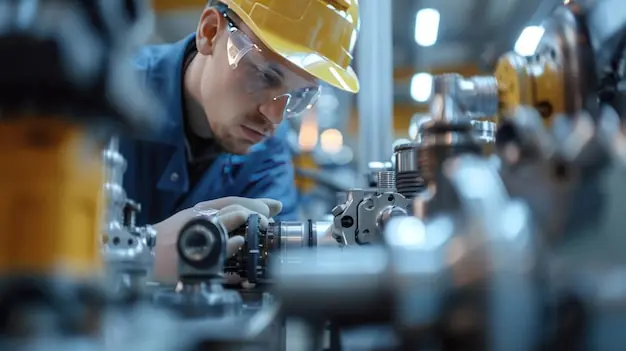
Mandatory vocational lab for Classes 6–12 with AI, coding, robotics, and 33 CBSE skill subjects.
- Option A (600 sq ft) or Option B (2x 400 sq ft)
- 33 vocational modules including AI Code 417 & 843
 Senior Secondary (11–12)
Advance Composite Science Lab
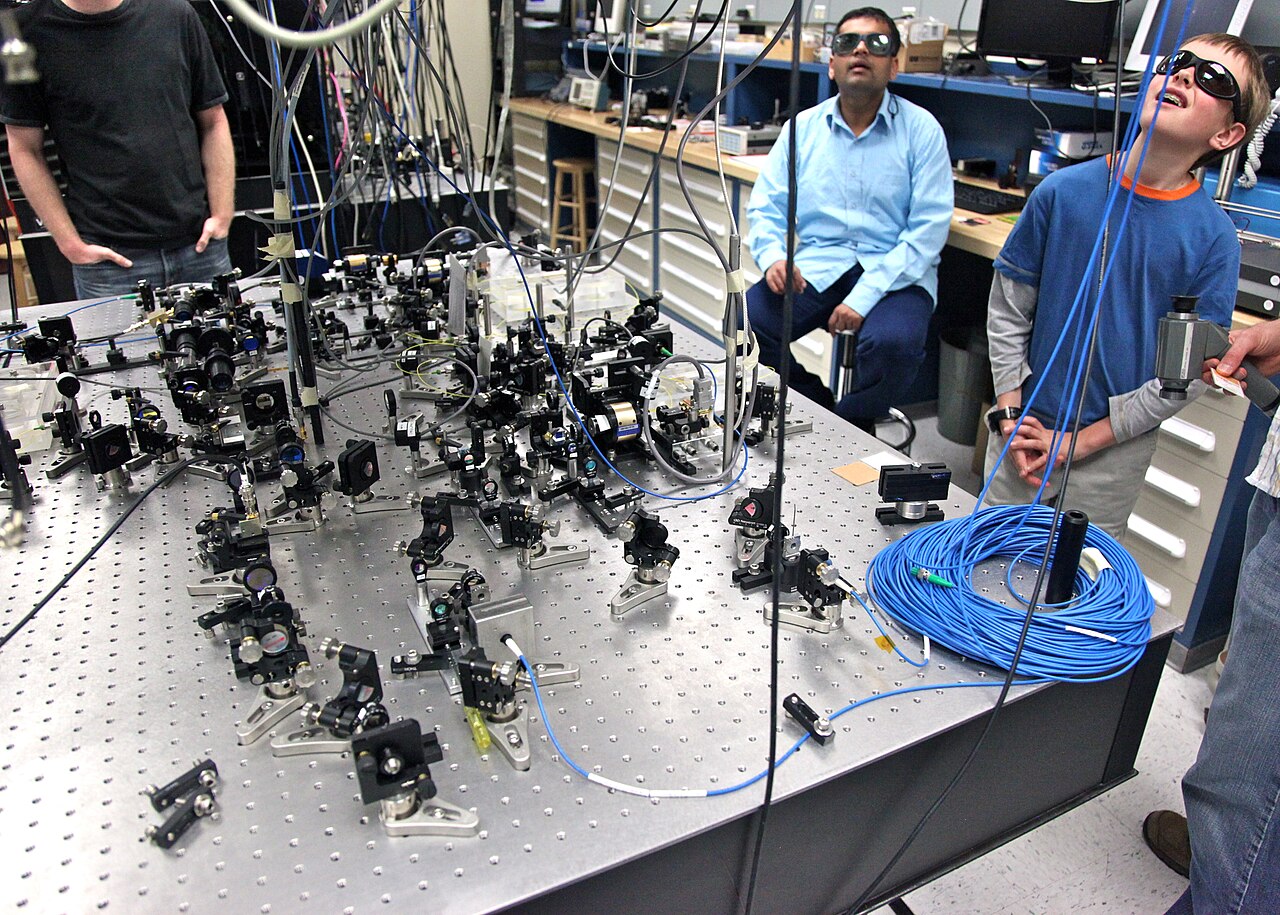
High-end interdisciplinary research lab with analytical spectrophotometers and research microscopes.
- Digital spectrophotometer, research microscopes & centrifuge
- Fume exhaust hood & Class 11-12 research stations
 ISRO Space Aligned
Astronomical & Space Lab
Interactive celestial observatory with motorized GoTo telescopes, solar filters, and planetarium software.
- Motorized 8" Schmidt-Cassegrain tracking telescope
- H-alpha solar filter, digital planetarium & astrophotography
 DGCA Micro-Aviation
Aerospace & Drone Lab
Aeronautical wind tunnel simulators, modular quadcopter kits, flight simulators, and safety net cage.
- Modular DIY multirotor drone kits & flight simulators
- Wind tunnel lift/drag test kits & flight safety netting
 Industry 4.0 Robotics
Robotics & IoT Super-Lab
Industrial kinematics, multi-sensor autonomous rovers, smart IoT cloud, and WRO competition tracks.
- 4-DOF/6-DOF robotic arms & autonomous rovers
- ESP32 wireless mesh & World Robot Olympiad mats
 NEP 2020 Makerspace
Design Thinking & Innovation Lab
Human-centric design studio with enclosed laser cutters, vinyl plotters, and woodworking workbenches.
- Enclosed laser cutter/engraver & vinyl plotter
- Heavy-duty ergonomic maker workbenches & tool kits
 Spatial Computing
AR / VR Immersive Science Lab
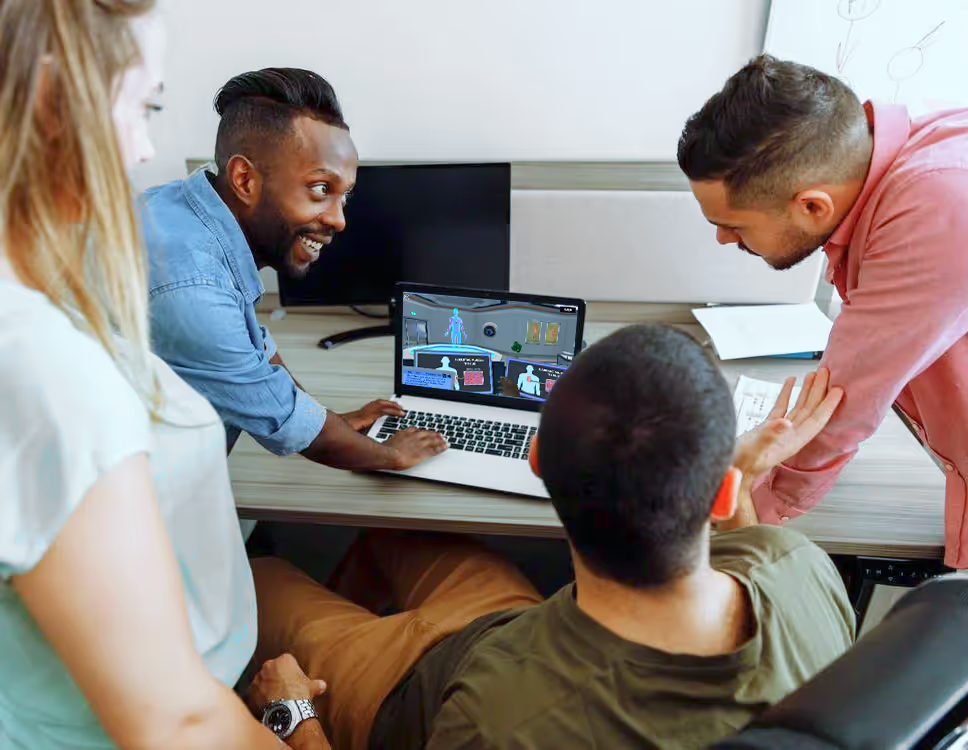
Virtual reality suites for 3D molecular biology, virtual dissections, and risk-free hazardous chemistry.
- Standalone 6-DoF VR headsets with teacher dashboard
- Virtual anatomy & chemistry simulations with zero hazard
 CBSE Math Lab Norm
Vedic & Experiential Math Lab
Eliminates math phobia through tactile geometric proof solids, algebra tiles, clinometers, and abacus.
- Tactile pythagoras models, algebra tiles & clinometers
- Vedic arithmetic abacus & chapter-wise NCERT kits
 Digital Phonetics
Language & Phonetics Lab
Interactive acoustic booths with AI-powered pronunciation waveforms, debate recording, and fluency trainers.
- Student audio terminals with master teacher console
- Real-time voice waveform matching for neutral accent
Planning Multiple Labs for CBSE Affiliation or PM SHRI Grant?
CSEEL offers integrated turnkey packages for Composite Labs, Atal Tinkering Labs (ATL), AI & Robotics Suites under a single audit-ready warranty with 3D CAD plans.